
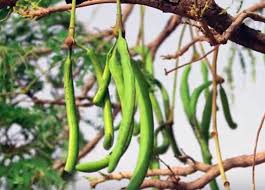
A large tree that produces nutritious seeds and pods.
The African locust bean (Parkia biglobosa, family Fabaceae) is a deciduous tree with a dense, wide, umbrella-shaped crown of heavy branches, usually 7 to 20 metres tall and occasionally 30 metres. The trunk is often short and can be 130 cm across, and besides a taproot the tree sends lateral roots out 10 metres or more. It is a very important multi-purpose tree, often planted in and around villages and kept on farms for shade.
The tree grows across western, central and north-eastern tropical Africa, on farmland under long cultivation, in open savanna woodland and on rocky slopes and stony ridges, mostly below 600 metres. It prefers a strongly seasonal climate with a dry season of four to eight months, full sun and deep, sandy to loamy soils, but also grows on shallow soils and thick laterite. Its deep roots and its ability to limit water loss let it survive drought once established. Trees begin to flower at five to seven years, reach full height after 30 to 50 years and can live for a century, and they also spread by root suckers. Each pod holds two kinds of seed: reddish ones with thin coats that germinate easily, and black ones that need their hard coat softened first. The bark and pods contain substances that are toxic to fish.
Source: Useful Tropical Plants database (Fern, K.).
The bark is used for treating infections and wounds.
The fermented seeds (dawadawa) are used as a flavoring in soups.