
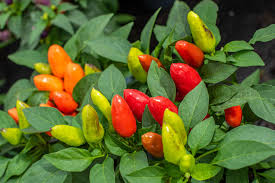
Capsicum annuum is a highly diverse and economically important pepper species native to the Americas, encompassing sweet and hot varieties cultivated worldwide.
The pepper (Capsicum annuum, family Solanaceae) is a short-lived evergreen perennial, usually grown as an annual, about 1 metre tall, though the height varies with the variety. It is grown throughout the world, especially in warm temperate to tropical climates, for its fruit, which includes both the sweet peppers and the hot chilli peppers, and it also has medicinal uses. Its original home is unclear, and it is not known in the wild. Hot peppers can cause painful irritation if used to excess or rubbed into the eyes, and the sap can blister the skin.
It grows well as a perennial in the lowland tropics and up to 2,000 metres, preferring 21 to 25°C and doing poorly above 32°C; 600 to 1,200 mm of rain a year is enough, and too much rain reduces flowering and fruiting and encourages disease. It needs a very warm, sunny place and a humus-rich, fertile, well-drained, slightly acid soil, ideally light and sandy. The first fruits can be picked about two months after sowing and picking can go on for two months or more, with yields of 12 to 20 tonnes per hectare. There are many varieties, grouped by fruit shape: small cherry-shaped hot fruits, cone-shaped fruits up to 5 cm long, hot red cone-shaped fruits up to 7.5 cm long, and the large sweet peppers, among others. Seed germinates in three to four weeks at 20°C, and seedlings are planted out at 8 to 10 cm tall.
Source: Useful Tropical Plants database (Fern, K.).
Traditionally and clinically, C. annuum is used to stimulate digestion, relieve pain through capsaicin-based treatments, and support metabolic and cardiovascular health.
Peppers are widely consumed fresh, cooked, dried, or processed into spices, sauces, and pickles, and are valued for their high vitamin and antioxidant content.
Historically important in Mesoamerican medicine and culture, peppers have long held ceremonial, protective, and dietary significance across many societies.
The crop thrives in warm, sunny conditions with fertile, well-drained soil, is grown from seed, and can be harvested at different ripeness stages depending on desired flavor.