
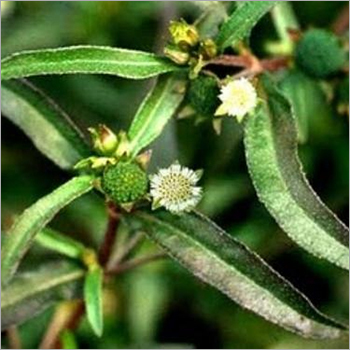
Eclipta alba (syn. Eclipta prostrata) is a widely used annual herb from the Asteraceae family, valued as a hair tonic, liver tonic, and medicinal herb in Ayurveda, Unani, and traditional Chinese medicine
False daisy (Eclipta prostrata, also known as Eclipta alba, family Asteraceae) is a branching annual, sometimes a short-lived perennial, 10 to 80 cm tall, with stems that stand upright or creep along the ground. It bears small, white, daisy-like flower heads. A single plant can produce 17,000 seeds, which need light to germinate, so they sprout where they fall on the soil surface.
It is found throughout the tropics and warm temperate regions and may originally come from the Americas. It grows mostly in poorly drained, wet places, along streams and ditches, in marshes and on the banks of rice fields, and also in lawns and in upland areas with more than about 1,200 mm of rain. It is a common weed of damp cultivated land. It prefers damp to wet soil and some shade.
Source: Useful Tropical Plants database (Fern, K.).
Hair Care: Prevents hair fall, premature graying, dandruff; used in Bhringraj oil.
Liver Health: Treats hepatitis, jaundice, liver enlargement, cirrhosis.
Skin & Wound Care: Eczema, dermatitis, cuts, burns, insect stings.
Respiratory & Digestive: Cough, asthma, bronchitis, piles, constipation.
Other Uses: Venom neutralizer against snakebites in some regions.
Young shoots cooked as a vegetable in Southeast Asia (e.g., lalap in Indonesia).
Leaves added to lentils or rice in Southern India; must be cooked.
One of the “Ten Auspicious Flowers” (Dasapushpam) in Kerala, India.
Used in Hindu ceremonies like Shradh.
Black leaf dye used for traditional tattooing.
Moist, shady habitats such as marshes, paddy fields, and along water channels.
Propagated via seeds or stem cuttings.
Prefers wet clayey or loamy soil with good moisture retention.
Harvest at early flowering (~90 days), leaving 4–5 cm stumps for regeneration.
Organic cultivation preferred to avoid heavy metal or pesticide accumulation.