
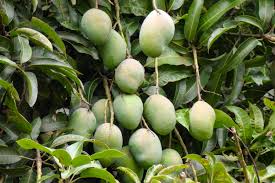
A large, evergreen tree (10–45 m) with a dense dome-shaped canopy, stout trunk, simple lanceolate leaves, small fragrant flowers, fleshy variable-shaped fruits with a fibrous stone, and a deep taproot system.
The mango (Mangifera indica, family Anacardiaceae) is a large evergreen tree 10 to 45 metres tall, with a dark green, umbrella-shaped, spreading crown and a long trunk 60 to 120 cm across. Its taproot can go 5 metres deep. It is one of the oldest cultivated plants in the world: it was grown in India 4,000 years ago, and from there it has spread to the tropics and frost-free subtropics everywhere for its fruit. In the wild, in the Indian subcontinent and Myanmar, it is a mid-canopy tree of humid forest. In sensitive people, eating the fruit or touching its juice can cause a rash.
Mango flowers best where there is a marked dry or cool season of at least three months, so the monsoon tropics suit it well. It grows up to about 1,200 metres (600 metres for commercial orchards), best at 24 to 30°C and with 600 to 1,500 mm of rain a year. It is not fussy about soil but crops better on rich, well-drained ground, and very poor or shallow land is unsuitable. Established trees tolerate drought and occasional flooding, and they do best sheltered from strong, drying winds. Seedlings take five to eight years to bear. Seed is best sown fresh, about 5 cm deep with the rounded side up; it germinates in about 18 days if peeled and 30 days if not. Good varieties are grafted onto seedlings of types whose seeds give several shoots.
Source: Useful Tropical Plants database (Fern, K.).
Leaves, bark, seeds, fruit, flowers, and gum are used in traditional medicine for diabetes, blood pressure, digestive disorders, respiratory ailments, diarrhea, dysentery, scurvy, and skin problems.
Ripe fruits eaten fresh or processed (juices, jams, desserts); unripe fruit used in pickles, chutneys, and powders; seeds for starch and famine food; young leaves occasionally as vegetables.
Sacred in Hinduism, used in doorway hangings, Kalash puja, ceremonial fires, and symbolizes prosperity, love, fertility, and immortality.
Thrives in tropical/subtropical regions, prefers well-drained loamy soil, propagated by grafting or seeds, requires moderate water, spaced 10–12 m apart, fruits harvested 3–6 months after flowering.