
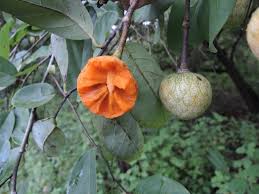
Annona senegalensis, known as African custard apple or wild soursop, is a versatile African plant with edible fruit, and its leaves, bark, and roots are used medicinally for issues like malaria, fever, diarrhea, infections (respiratory, skin, oral), snakebites, and digestive problems, possessing antioxidant, anti-inflammatory, antimicrobial, and antiparasitic properties.
The wild custard apple (Annona senegalensis, family Annonaceae) is usually a many-stemmed, deciduous shrub 2 to 6 metres tall, though in good conditions, especially in East Africa, it can become a tree up to 11 metres. It is seldom cultivated: its fruit is gathered from the wild and sometimes sold in local markets, and botanists consider it a candidate for domestication. It is widespread and not under threat, and is classed as Least Concern on the IUCN Red List (2019).
It ranges from Senegal to Kenya and south to Zimbabwe, in dry open woodland, bush and grassland from sea level to 1,500 metres, and along river banks, on fallow land and in swamp forest. It is often found as a single plant beneath the trees of savanna woodland and prefers light shade. Its flowers carry both male and female parts, but the female parts are usually not ready when the pollen is shed, so pollination is often incomplete, which is why misshapen fruits are common; fruit cracking is also frequent. Trees regrow after cutting and send up suckers, especially where roots have been damaged by fire or by farmers and animals, and seedlings come up well on recently farmed or burnt land. The seeds lose their viability within about six months.
Source: Useful Tropical Plants database (Fern, K.).
Medicinal Uses (by Plant Part)
Leaves: Fever, malaria, yellow fever, tuberculosis, smallpox, gastrointestinal issues, oral infections, skin conditions, and as a vector control against mosquitoes.
Bark: Hernias, snakebites, diarrhea, gastroenteritis, respiratory infections, toothaches, guinea worm, and open sores.
Roots: Viral infections, gastritis, male sexual impotence, erectile dysfunction, dizziness, snakebites, diabetes, tuberculosis, and as antidotes for toxins.
Fruit: Eaten for nutrition and digestive benefits; pulp is consumed.
Juice: Used for chickenpox.
The ripe fruit pulp is eaten fresh and has a mild, pineapple-like flavor; flowers and seeds are sometimes used to season food.
A hardy shrub of savanna woodland, tolerant of fire and drought; sometimes retained or planted near homesteads for its fruit.