
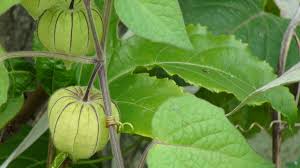
Physalis angulata is an erect annual herb with lantern-like calyx-enclosed berries, ovate leaves, and pale yellow flowers, whose ripe fruits are edible while unripe parts are toxic.
Cutleaf groundcherry (Physalis angulata, family Solanaceae) is an upright annual herb with spreading branches, growing from a taproot to between 10 cm and 2 metres tall; its lower stems sometimes lie on the ground and root. It is gathered from the wild as food and used in the traditional treatment of many illnesses, and it is often left standing when it comes up as a weed on farms; in Mexico it is sometimes grown for its fruit, which is commonly sold in markets. Care is needed: the unripe fruit and the leaves contain solanine and related alkaloids and are toxic if eaten in quantity, while the ripe fruit is usually edible.
Originally from tropical America, it has spread through the tropical, subtropical and warm temperate regions and is naturalised in Africa, where it is often treated as a weed of crops and gardens; it can also carry diseases of tomato, tobacco, okra, pepper, beans and other crops. It grows in fields, fallows, grassland and along rivers, from sea level to 2,400 metres, prefers moist, fertile soil in sun or light shade, and tolerates light frost but does poorly in great heat. Plants raised from seed can flower after six weeks and ripen fruit six weeks later. It resists pests and diseases well, and its seed germinates quickly when sown where the plant is to grow. It is classed as Least Concern on the IUCN Red List (2017).
Source: Useful Tropical Plants database (Fern, K.).
The plant is widely used in traditional medicine as an anti-inflammatory, immune stimulant, and antimicrobial for treating pain, respiratory illnesses, liver disorders, metabolic diseases, infections, and postpartum conditions.
Its ripe berries are eaten fresh or processed into sauces, jams, and salads, while young leaves are sometimes cooked as a vegetable.
Physalis angulata is culturally used in traditional healing practices, children’s play, and ritual poultices for skin ailments and snake bites in parts of Africa and Southeast Asia.
Easily grown from seed in warm, well-drained soils, it is a fast-growing plant harvested when the papery husk dries, though it can host crop-damaging diseases.